


Quiet luxury and CleanFit minimalism have reshaped modern fine jewelry preferences. Irregular textured pearls are gradually taking the place of traditional round pearls, among which keshi pearls stand out. Favored by countless designers for their slim silhouette and soft hazy luster, keshi pearls are nevertheless widely misunderstood purely due to their unregulated forms.
Many consumers mistake them for pearl scraps, defective beads or even synthetic fakes. Such misunderstandings arise from judging pearl varieties solely by outward appearance, while overlooking internal growth structure—the core standard for pearl classification.
1. Essential Distinction: Keshi vs Conventional Pearls
Regular round pearls and baroque pearls form as mollusks secrete nacre in steady cycles. Each boasts distinct merits: round pearls carry poised classic charm, while baroque pearls feature organic and playful shapes. Both are well-established cultured pearls with mature aesthetic and value systems.
It is important to clarify the professional industry boundary here. In the premium gem trade, genuine freshwater keshi pearls are highly recognized as a distinct, non-bead category. While standard freshwater baroques grow around an intentional matrix, true freshwater keshi forms entirely by chance during the cultivation process—either as an accidental byproduct of cell-piece culturing or when a robust mussel naturally expels an inner core. Freed from structural constraints, the fine nacre cannot condense into spherical shapes, stacking freely into uneven pearls with variable thickness and organic silhouettes.
This natural accident grants keshi its defining trait: it consists entirely of 100% pure solid nacre without any shaping scaffold inside, growing in complete freedom. Keshi and baroque pearls hold equal status, only differing in growth paths. Baroque pearls gain irregular shapes while growing around a fixed matrix, maintaining full and intact bodies. Keshi develops entirely from freely piled nacre layers. Both showcase natural beauty, differing merely in texture and light performance.

2. Distinctive Soft Luster Unique to Keshi
Internal structural differences equip keshi with exclusive luminous traits. A pearl’s luster is determined by nacre thickness, layer count, and crystalline arrangement. Conventional pearls feature parallel, neatly arranged nacre layers over a solid bead, resulting in flat, single-dimensional mirror shine.
The organic nacre layers of keshi overlap in complex, undulating micro-structures. When light hits the bead surface, multi-layer diffuse reflection and light interference occur within the pure aragonite crystal work, generating flowing, hazy overtones and a rich orient. This restrained soft glow never casts harsh glares, and this authentic organic physical structure can never be fully replicated by synthetic imitations. It fits seamlessly into modern minimalist styles, creating an effortless high-end vibe.
3. Natural Rarity & Low Formation Rate of Keshi
Free-form growth inherently shapes keshi’s typical look: most appear as thin flakes or tiny granules. We can also summarize the universal size rule in the trade. Seawater keshi mostly measures between 2mm and 7mm, and specimens exceeding 8mm are extremely rare. Freshwater keshi has a slightly larger size range, yet thick intact pieces over 10mm still carry a steep price premium. Large thick specimens are always scarce, which is a natural outcome rather than a flaw. Without an inner bead nucleus to dictate its volume, nacre accumulates bit by bit slowly and rarely forms large, perfectly spherical pearl bodies.
Industry farming data backs its low yield. Among Akoya oyster harvests across Japan, genuine keshi accounts for less than 10 percent of total output. South Sea and Tahitian pearl farms routinely use X-ray inspection; if bead expulsion is detected, farmers actively perform re-nucleation to save the pearl crop, which naturally suppresses keshi formation as a byproduct. Similarly, in high-end freshwater pearl operations, premium natural-expulsion keshi pearls are highly coveted. The vast majority result in paper-thin, dull fragments primarily suited for cosmetic processing or lower-end crafting.
Keshi formation hinges entirely on the spontaneous natural expulsion of the nucleus within the mollusk, a biological event impossible to fully control artificially. Even after core expulsion, inconsistent nacre secretion rarely produces complete pieces with even, high-intensity luster. Reliant fully on natural conditions and the vitality of the host mussel, top-grade keshi can never be mass-produced.
4. Market Misconceptions & Identification Basics
To avoid confusion and safely navigate the market, we can split the identification approach into two core pillars:
First, distinguish genuine organic keshi from man-made plastic, glass, or shell imitations.
Authentic keshi is a natural organic gemstone formed within the mollusk, meaning its rich texture and orient come from solid, concentric layers of nacre. Synthetic replicas only mimic the outer contours using factory coatings, entirely unable to replicate the microscopic aragonite brickwork or the cool, gritty texture of real nacre. As a result, fakes present a stiff luster and artificial warmth, completely lacking the depth of light reflection found in true organic pearls. Furthermore, because they grow freely within the freshwater mussel, no two genuine keshi flakes share an identical silhouette or thickness. Any batch exhibiting highly uniform contours or a completely flat, stamped backside is a major red flag for machine-made counterfeits.
Second, tell premium, investment-grade freshwater keshi apart from standard mass-produced commercial variants.
The trade must not confuse collector-grade keshi with standard, short-cycle commercial freshwater pearls, even though "baroque" merely defines an irregular shape. While the mass market is flooded with low-grade, mass-harvested non-bead pearls that display a flat, chalky or chalk-white luster, premium freshwater keshi pearls undergo an extended growth period of several years inside the mussel. This allows the crystalline aragonite layers to mature perfectly, resulting in the high-intensity metallic reflection and liquid-like luster demanded by high-end contemporary jewelry design.
5. Vintage Keshi vs Modern Cultivated Keshi
Keshi is no newly trending material but a long-time favorite among high-end designers and antique craftsmen. Keshi pearls formed in the early eras of pearl cultivation underwent lengthy growth cycles, developing a mellow, deeply layered luster tempered by time and holding solid collectible value today. In contrast, modern cultivated keshi retains the identical 100% full-nacre structure but benefits from advanced ecology and refined husbandry. This results in cleaner surfaces, exceptional crystalline density, and an intense, mirror-like reflection—perfectly matching the casual minimalist aesthetic of contemporary wearers.
6. The Understated Natural Aesthetic of Keshi Pearls
Classic round pearls represent standardized perfection, suiting formal and ceremonial occasions. Keshi embodies an exclusive organic charm via its uneven shapes and gentle, flowing glow, with no two beads sharing an identical texture, luster, or outline.
Against the backdrop of overflowing, mass-produced standardized jewelry, keshi’s unpretentiousness becomes its most precious merit. It breaks the narrow, single-sided pearl aesthetic, interprets soft elegance forged by nature itself, and delivers an understated sophistication perfectly aligned with quiet luxury styling.
7. Keshi Pearls Matching Ideas
Most people still associate pearls with formal events and stiff ceremonial wear, which often deters casual wearers from exploring pearl jewelry entirely. This is precisely where keshi shines as the ideal starting point for contemporary buyers.
Its subtle glow and lightweight profile strip away the intimidating formality of traditional round pearls. Tiny chip or petal-shaped keshi works seamlessly for office days, weekend trips, and casual streetwear without ever feeling overdressed. Beginners do not need to invest heavily in massive heirloom pieces; a pair of petite keshi studs or a slim, delicate chain offers an effortless, highly approachable entry point to experiment with pearl styling.
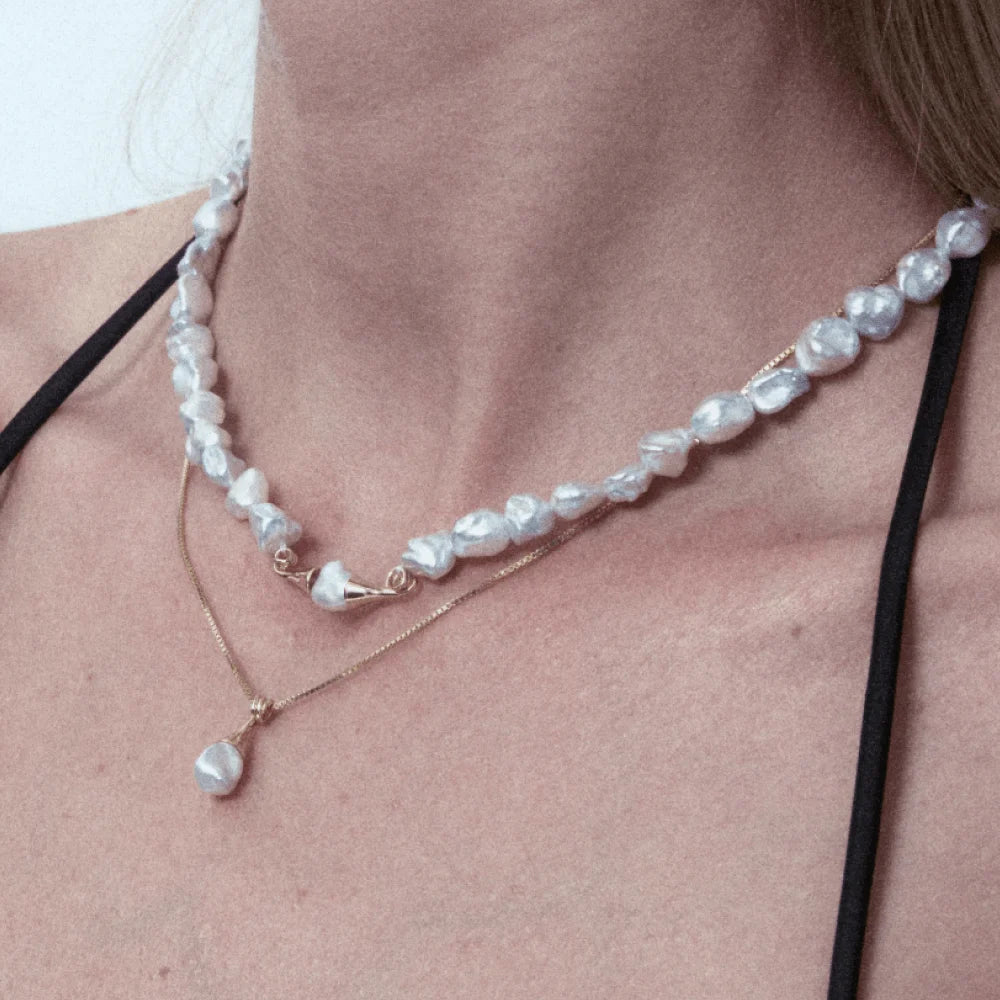
Keshi also works beautifully in mixed-stone designs, which explains its immense popularity among independent jewelry creators. Its neutral, creamy white tone serves as a perfect canvas for semi-precious stones. Paired with lapis lazuli, it balances deep indigo with soft pearlescent white for a striking minimalist look. Matched with muted jade, it creates a calm, organic palette that perfectly complements East Asian casual aesthetics. When combined with small garnets or amethysts, keshi softens bold gemstone hues, keeping the overall design sophisticated rather than flashy.
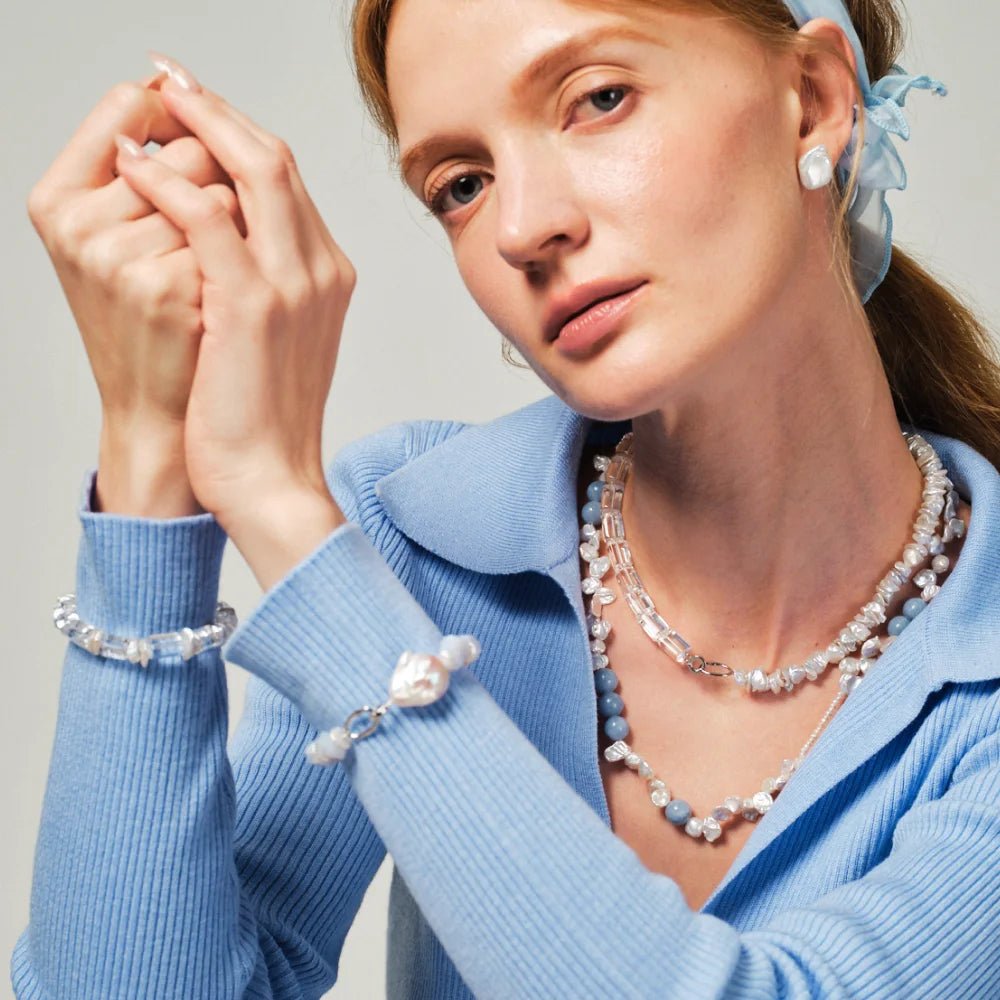
Metal pairings are equally flexible. Polished 18K gold enhances its warm, quiet-luxury undertone, while matte silver brings out a bohemian, everyday artistic vibe.
We can narrow down selections based on different modern lifestyle occasions:
- For Daily Office Wear: Choose blemish-free, high-luster small freshwater keshi. Simple single strands or minimal keshi earrings add a touch of quiet refinement that elevates a corporate look without drawing loud attention.
- For Layered CleanFit Styling: Mix keshi pieces in varying sizes, or alternate free-form keshi beads with plain metal chains to build multi-layer necklaces with fluid, textual depth.
- For Curated Artisanal Jewelry: Pick thick-nacre keshi with pronounced organic growth lines, pairing them with rough, raw gemstones. The contrast between the lustrous crystallization of the pearl and the unpolished stone creates the raw, natural look highly coveted by premium independent jewelry brands.
Compared with large baroque pearls and big Akoya rounds, keshi lowers the barrier to wearing pearls. It bridges fine jewelry and casual daily accessories, turning pearls from event-only pieces into staples for everyday outfits.


