

Two pearls can sit side by side and catch the light in entirely different ways. One may have a soft, rounded silhouette; the other may have a curve that makes you want to look again. That individuality is part of the appeal of baroque pearls—and it can also make their value a little harder to judge from a photograph.
Yes, baroque pearls can be valuable. Their irregular shape does not make them imitation or automatically lower quality. Value depends on a combination of qualities, including luster, surface, size, shape and the way a pearl is used in a piece of jewelry. For the person wearing it, the right shape and a design they love matter too.
If you are comparing baroque pearl prices, it helps to know what you are looking at before deciding which piece is worth it to you.
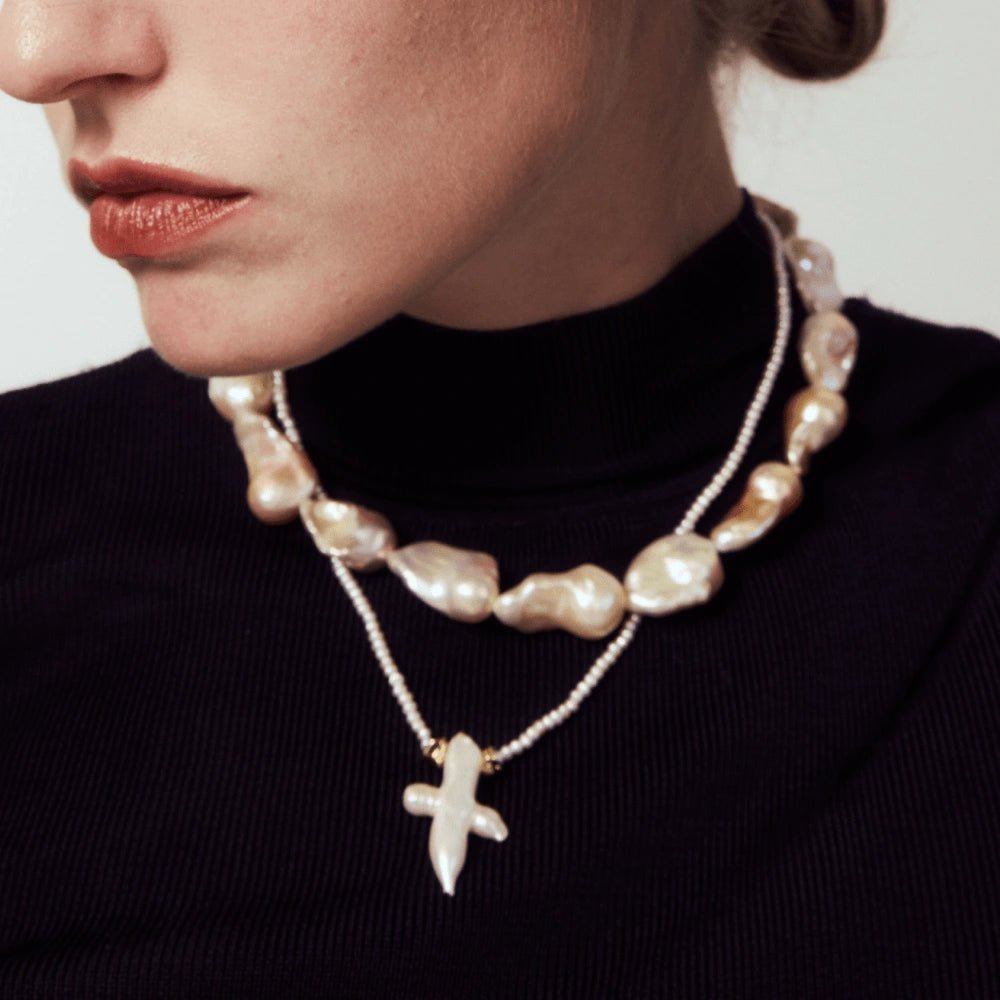
Are Baroque Pearls Expensive?
They can be, but there is no single price for a baroque pearl. Freshwater and saltwater pearls come from different environments, and individual pearls vary in size, appearance and quality. The finished piece also has its own considerations: the number of pearls, how they are matched or arranged, the materials used for the clasp and fittings, and the work involved in making the jewelry.
A higher price alone does not tell you whether a necklace is right for you. Look closely at the pearls and the construction, check the product details, and think about how you would wear it. Shopping for a gift? The piece someone reaches for often may feel more meaningful than one chosen only for its size or price.
What Affects the Value of a Baroque Pearl?
Luster: How the Pearl Reflects Light
Luster describes the quality and intensity of the light reflected from a pearl’s surface. A pearl with strong luster can appear bright and reflective; another may have a softer glow. Compare photographs taken in similar light when you can, and look for close-ups as well as images of the piece being worn. Screen settings and lighting can change how a pearl appears, so ask for more images if an important detail is unclear.

Surface: Character and Condition
Baroque pearls can show natural surface characteristics, including ridges, dimples or variations in texture. These features are part of what makes each pearl individual. At the same time, a buyer may reasonably want to ask about an apparent crack, chip or area of damage. Ask for a close-up and an explanation when you are unsure; a photograph alone may not tell the whole story.
Shape: An Individual Silhouette
“Baroque” describes an irregular shape rather than a single style. Some pearls appear elongated, others rounded, sculptural or asymmetrical. Shape affects the look of the finished piece and may affect its price, but no one silhouette is automatically best for every wearer. Notice how the pearls sit together and whether the overall necklace feels like your style.
Size and Matching
Larger pearls can be more expensive, but size is only one part of the picture. In a strand, look at how the pearls relate to one another: their size, color, luster and shapes may be closely matched or intentionally varied. Which arrangement you prefer is a matter of taste as well as budget.
The Finished Necklace
The pearl is only part of a piece of jewelry. Before buying, check the listed metal and any plating, the necklace length, the clasp and any available size options. If a detail is missing or appears inconsistent, ask the seller to confirm it. A beautiful pearl is more enjoyable when the finished necklace works for the person wearing it.
How to Choose a Baroque Pearl Necklace
Start with the color and overall feeling you are drawn to, then look more closely at the pearls and practical details. If you are choosing between pieces, compare them in similar photographs and check the product pages for current options. Color on a screen can look different in person, and individual pearls may vary.
 Lucian
 Elysian
Our necklace collection includes several different color directions. For a soft pink look, explore Lucian. If a warmer golden tone appeals to you, take a look at Elysian. For a white pearl necklace, see Goddess. These are different style choices, not a ranking of pearl quality.
You can also browse the baroque pearl necklace collection to compare styles. For exact materials, lengths, clasp details and availability, check the individual listing or contact us before ordering.
Are Baroque Pearls Worth Buying?
A baroque pearl can be worth buying when you understand what you are choosing and love the way it looks and feels. Consider the pearl’s appearance, the quality and condition of the finished piece, the information the seller provides, and how comfortably the design fits into your life.
Personal enjoyment and resale value are different questions. Jewelry does not have a guaranteed resale price; if resale or insurance value is important to you, seek an independent appraisal for the specific piece.
Frequently Asked Questions
Are baroque pearls real pearls?
Baroque describes a pearl’s irregular shape. Both natural and cultured pearls can be baroque; the word itself does not tell you how a pearl formed or whether it is genuine. Check the seller’s description and ask if you need more information about a particular piece.
Why are some baroque pearls more expensive than others?
Price can reflect the type and size of the pearl, its luster and surface, and the design, materials and construction of the finished jewelry. Compare those details rather than relying on price or shape alone.
Does an irregular shape mean a pearl is lower quality?
No. An irregular shape is what makes a pearl baroque. Assess its luster, surface and overall appearance, then decide whether its individual shape is one you enjoy.


