


A single focal pearl or a continuous line of luster? Choose the effect you want, then check how the necklace fits the way you dress.
You can picture both with the same shirt: one pearl on a fine chain, or a strand that follows the neckline. Neither feels wrong. They simply do different things. The pendant gives the eye somewhere to settle; the strand carries that interest along a line of pearls.
Should you choose a pearl pendant or a pearl strand for everyday wear? Choose a pendant when you want a distinct focal detail with space around it. Choose a strand when you want a line of pearls to shape the look. Then compare the actual pearl size, necklace length and construction. A pendant is not automatically subtle, and a strand is not reserved for special occasions.
With baroque pearls, irregular contours give a pendant its particular shape and a strand its changing rhythm. The two Baroque Hour examples below show the difference without asking you to adopt a whole new wardrobe.
Choose a pearl pendant when you want one detail to lead
A pendant puts the emphasis on a particular shape. With a fine chain, much of the neckline remains open, so the pearl reads as a detail rather than a continuous border. If you like the way a plain shirt or dress looks before adding jewelry, this can be a useful starting point.
Seraphina's square-shaped purple freshwater pearl sits on a box chain with an 18K gold-plated silver bail. Its uneven outline gives you something to look at beyond the chain itself. It is a pendant with a clear shape, not a tiny accent intended to disappear.
The square pendant is the lower necklace in the photograph, worn against a black V-neck. To try the single-focus approach, wear it alone and leave that open space around the pearl.


Seraphina | Purple Square Baroque Pearl 18K Gold-plated Silver Pendant
One purple freshwater pearl on a box chain: an irregular square-like shape as the focal detail.
Featured here: the lower, square-shaped pendant. The shorter necklace and bracelet in the wearing image are separate pieces.
Choose a pearl strand when you want a continuous line
A strand spreads the effect across a series of pearls. Rather than following the chain down to one focal point, your eye follows the necklace itself. It can give a simple outfit a more defined finish without requiring a pendant or another layer.
Rowena is a substantial example: gray freshwater baroque pearls, listed at approximately 18–24 mm, sit side by side with silver details. The changing contours keep the line from looking uniform. In the wearing photograph, the pearls follow the neckline rather than drawing the eye down to a single drop.
That presence comes from this necklace's pearl scale as well as its strand construction. A finer strand would make a different impression; a large pendant could be equally noticeable. These are examples of two formats, not a rule that strands must be bolder. Compare the silhouette first, then decide how much color and scale you want.
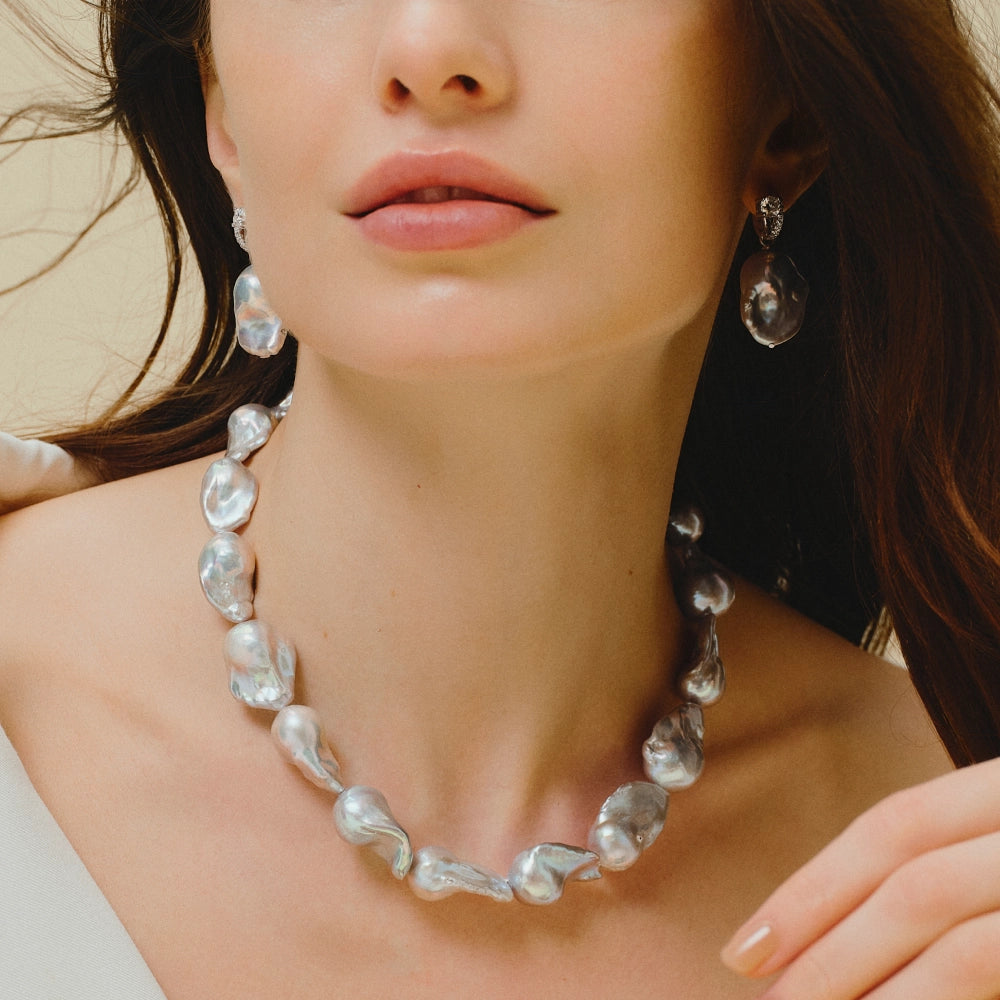

Rowena | Gray Baroque Pearl Silver Necklace
Gray freshwater pearls sit side by side, bringing a continuous line of irregular shapes to the neckline.
Rowena is the necklace featured here. The earrings in the wearing photograph are separate.
Let the clothes you actually wear break the tie
Pick two outfits you already repeat: perhaps a shirt and jeans, and the dress you reach for when dinner is last-minute. Ask what you want the necklace to add to each. A small point of interest? Or enough pearl detail that the rest of the outfit can stay very simple?
Then look at the jewelry you tend to keep on. If you already wear a favorite pair of noticeable earrings, compare how each necklace works beside them. A fine-chain pendant may leave more space, but its pearl can still compete for attention. If a necklace is usually your main piece, a strand may give you the finished effect you want without adding anything else.
Neither format comes with a dress code. A strand can belong with denim; a pendant can belong with a dinner dress. The useful test is whether you can imagine reaching for it on an ordinary day—not only in the photograph that first caught your attention.
Check the necklace, not just the category
Before choosing, look beyond the words “pendant” and “strand.” A few practical details can change how either one wears:
- What is included? Check whether a pendant comes with a chain and whether other necklaces in a styling image are sold separately. A layered photograph does not necessarily show a set.
- Which length are you selecting? Seraphina has separate 16- and 18-inch options. Do not assume two listed lengths mean one adjustable chain. Compare with a necklace you own; our pearl necklace length guide covers that decision in more detail.
- How large are the pearls? Pearl dimensions and necklace length describe different things. With irregular pearls, check the outline in the product and wearing photographs as well as the measurements.
- Does the construction suit you? Look at the fastening, chain or stringing, and stated metal. If weight matters, ask for the necklace's actual weight rather than judging it from the number of pearls. Neither format guarantees greater comfort.
Everyday wear also does not mean leaving pearls on for every activity. Make room for their care needs; our pearl care guide explains the habits to avoid.
The better choice is the one you will reach for
Start with a pendant if one distinct pearl is the detail you want. Start with a strand if you want the line of pearls to be a more continuous part of how you dress. There is no need to buy both to get it right.
Explore Baroque Hour's pearl pendants and baroque pearl necklaces, keeping those two effects in mind. Choose the necklace you can already see yourself wearing.


